Projects/HIPPS at BP ROO
Flagship project · Process Skids

Design, Manufacturing & Testing of 17 SIL‑3 IOPPS Skids

High-integrity pressure protection system skids for BP’s Rumaila Operating Organisation, Iraq: hazardous-area, cryogenic design, solar-powered, electro-hydraulic ESD, fabricated in the UAE and delivered to site.

Customer
Rumaila Operating Organisation Rumaila Operating Organisation
Role
Lead Engineer (Mechanical)
Standards
ASTM/ASME · API · ACI · BP ROO Standards

01 · Introduction

HIPPS was INTECH’s first project in the process skids product class. The scope was Lead Engineer (Mechanical) on 17 SIL‑3 high-integrity pressure protection skids for BP’s Rumaila Operating Organisation in Iraq: hazardous-area, cryogenic design conditions, solar-powered, electro-hydraulic emergency shutdown systems, fabricated at two facilities under two contracting models. The product class, the customer class, and the documentation standard were new to INTECH as a business unit.

The scope covered the full delivery cycle: detailed engineering, vendor procurement and augmentation, QA/QC set-up, integration, factory acceptance testing at both fabricator facilities in the UAE, change-order management, and a FAT framework for remote delivery. The skids were delivered to Iraq.

All 17 SIL‑3 skids were delivered to Iraq across both fabricator facilities and both contracting models. Engineering deliverables grew from 40–50 to more than 150 to meet BP’s documentation standard, and that output became the baseline for the skids portfolio. Structured change management reduced fabricator change orders, and self-built CADWorx and Navisworks capability replaced an external redesign quote at a small fraction of its cost. The FAT framework was handed over for remote management after the typical skid’s FAT.

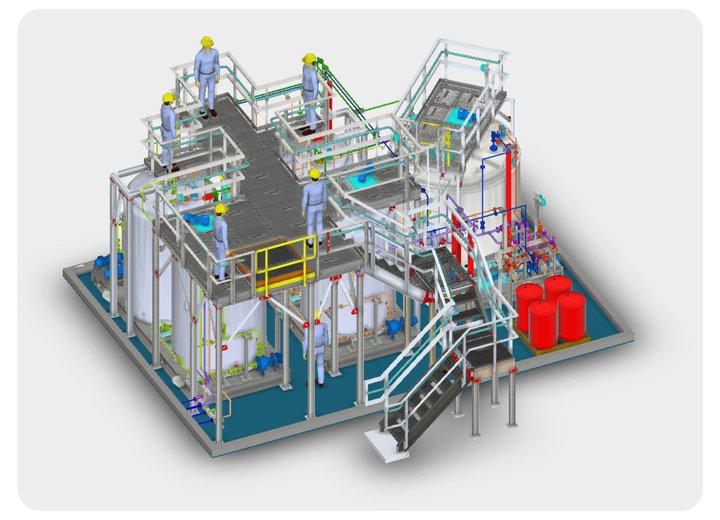
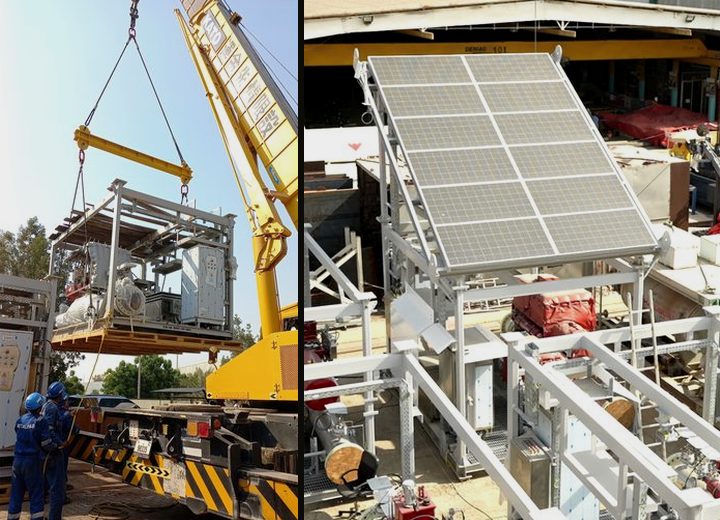
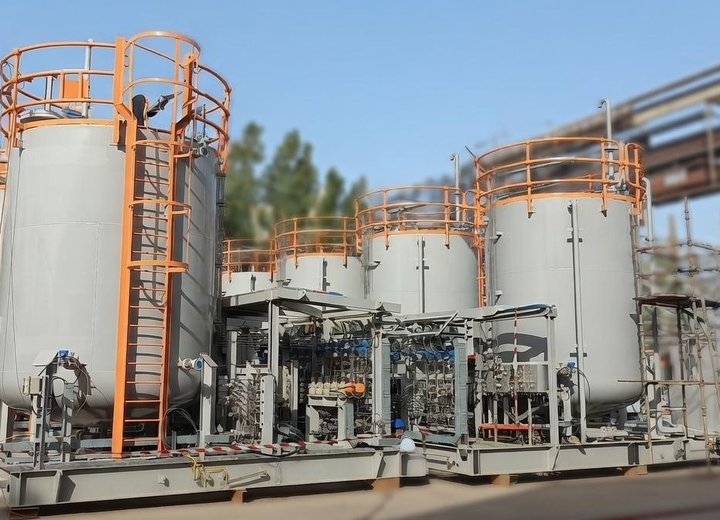
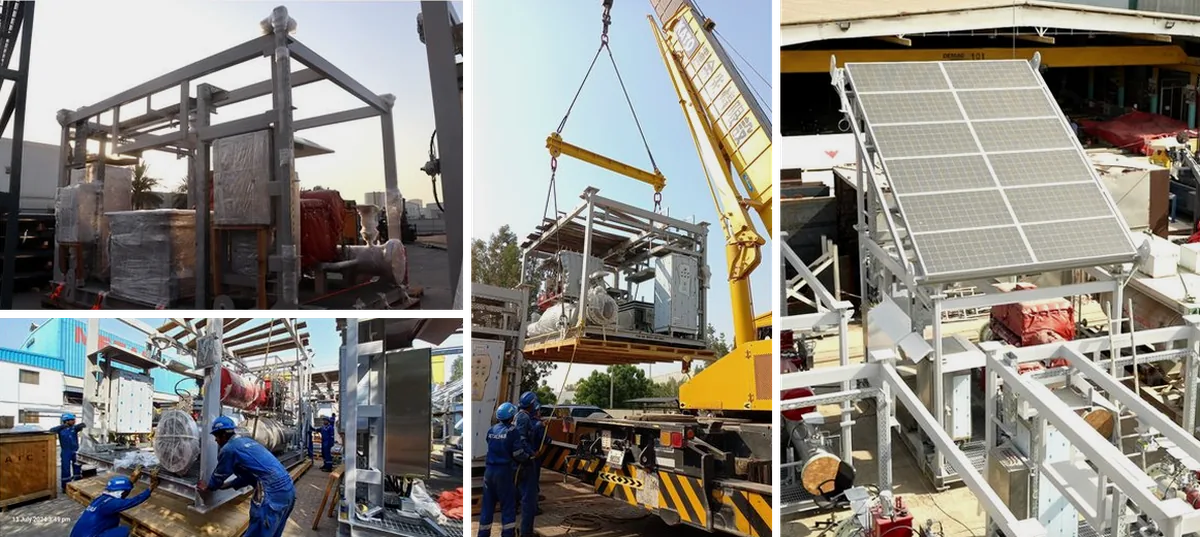
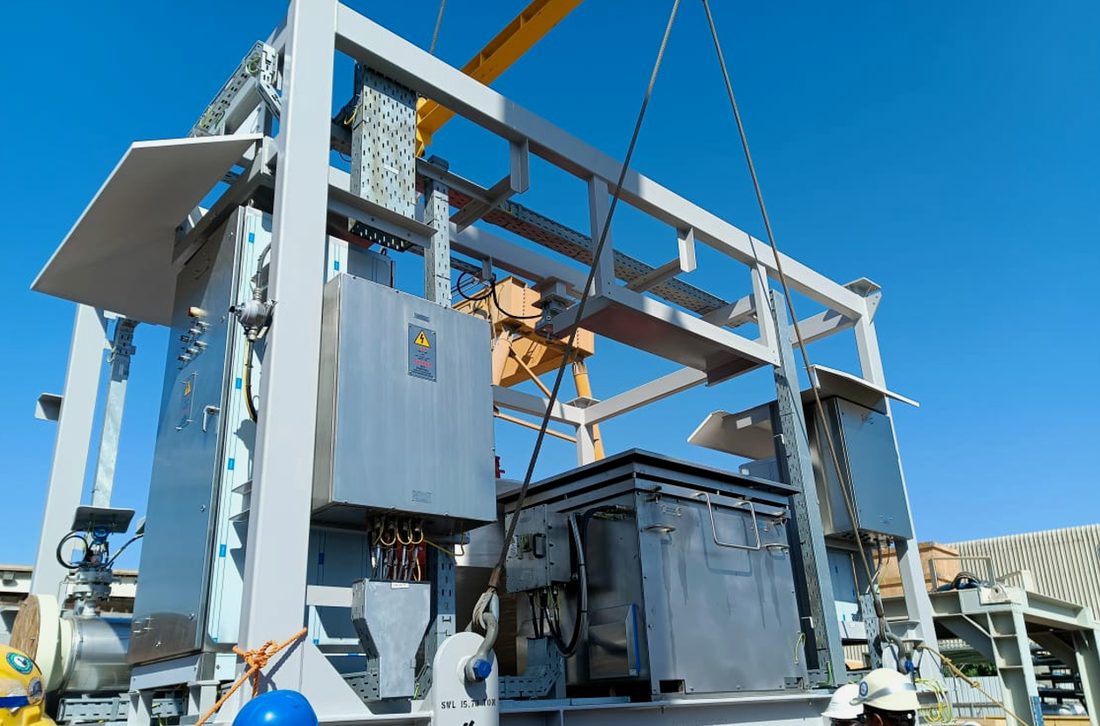
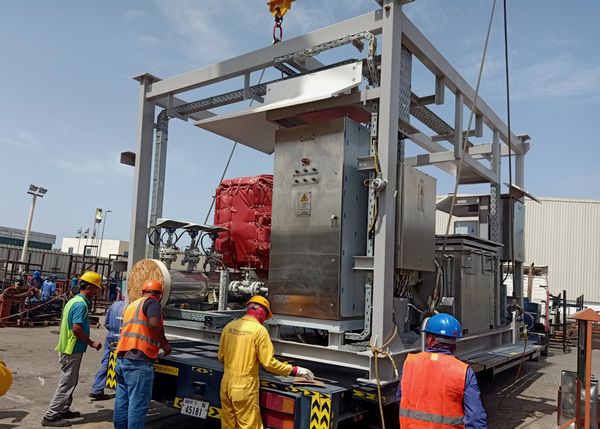
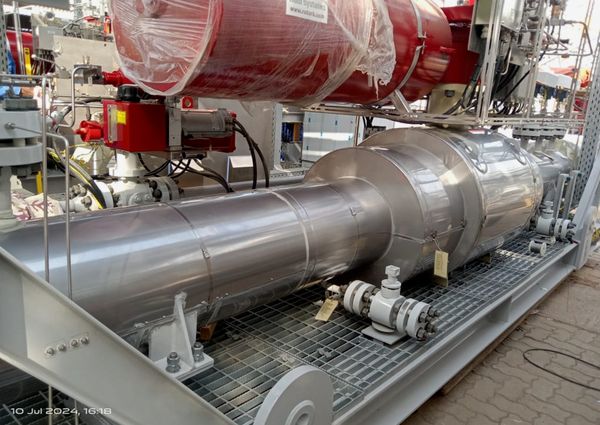
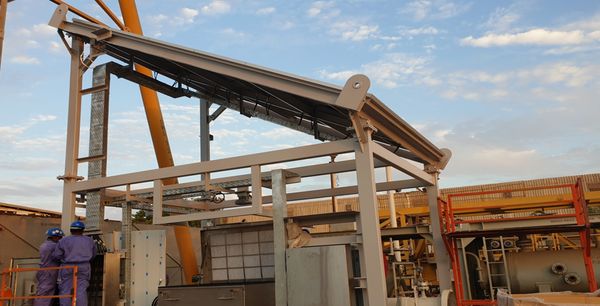
HIPPS skid assembly — UAE fabrication facility
BP ROO HIPPS, Skid assembly, UAE fabrication facility

The sections below show how it was delivered.

02 · Five technical challenges

The project’s main engineering problems and how each was solved.

The five challenges cover commercial structure, discipline engineering, and QA/QC cost control across the full scope of a flagship skids project.

01 / 05

USD 25K design-contractor redesign quote closed at under USD 1K

In-house capability replaced an outsourced redesign at 96% lower cost.

Problem

After integration at the first fabricator facility, design changes made during integration had to be incorporated into the engineering documentation: as-built drawings updated, 3D model reconciled, and a revision package issued. The design contractor quoted a fee for this work that exceeded the original design cost. The scope was a documentation update rather than new engineering design, and the quote exceeded the technical content.

Approach

Instead of accepting or negotiating the quote, built the capability to carry out the redesign directly. Learned Navisworks and CADWorx to review design-vendor deliverables and take technical ownership of 3D model work on this and later projects. With that capability in place, engaged a CAD draftsman on an hourly basis to complete the drafting under my technical direction.

Solution

Directed the full redesign: identified the deliverables requiring update from the integration-stage change log, scoped the drafting effort, supervised the hourly work, and reviewed the output. The redesign closed in approximately one week at approximately 96% below the quote. Navisworks and CADWorx became standard tools on subsequent skids work, including design-vendor deliverable review on CI.


02 / 05

Adapting QA/QC to the customer’s QHSE standards with cost discipline on a SIL‑3 project

Adapting the existing quality function to the customer’s QHSE standards during execution while reducing its cost.

Problem

QA/QC for HIPPS had to be set up while the project was already in execution, and the existing quality function needed to be modified to meet the customer’s QHSE standards. The project class (SIL‑3, cryogenic, hazardous-area) carried inspection, NDE, and witness-point requirements that could not be deferred. Two cost drivers sat within the QA/QC scope: the welding-inspector certification level (assumed by default at CSWIP 3.2) and third-party inspection rates from the incumbent inspection companies. Both exceeded the technical need on review.

Approach

Set up the QA/QC function around the project requirements and reviewed each cost driver against the actual technical need before accepting the default. For the welding inspector, made the case to the customer that CSWIP 3.1 matched the HIPPS weld-inspection requirement, that 3.2 was not technically necessary, and that a CSWIP 3.1 inspector could serve as the signing authority at the end of each milestone. For third-party inspection, evaluated alternative vendors alongside the incumbents.

Solution

The customer approved a CSWIP 3.1 welding inspector after technical justification, deployed for more than six months of execution. Third-party inspection moved to an alternative vendor at a 30% lower rate than the incumbent, and the vendor was later used on several subsequent INTECH projects. The QA/QC function was stabilised during execution without schedule impact. AED 22K of direct cost was avoided over 11 weeks through TPI cost optimisation.

03 / 05

Inbound fabricator COR control through structured change management

Moving change management from case-by-case handling to a defined process.

Problem

Change orders on a SIL‑3 skids project usually run in two directions: inbound CORs from fabricators claiming additional scope, and outbound CORs to BP for approved scope additions. On a project of this complexity, a high volume of inbound CORs is expected, each one consuming engineering effort, schedule, and commercial margin. HIPPS also showed frequent tag changes in the engineering documentation, which created NDE, QA, and documentation work that a structured tag-change process could prevent.

Approach

Built change management into HIPPS execution instead of handling CORs case by case. For inbound CORs, design-review discipline, the QA/QC alignment with the customer’s QHSE standards (Challenge 2), and engineering-led vendor procurement together reduced the grounds for fabricator claims. Where CORs did arise, prepared engineering responses rather than negotiating on commercial terms alone. Identified during execution that a dedicated Tag Change Management Process could reduce tag changes significantly, then developed the plan and deliverables and led its implementation.

Solution

Inbound fabricator CORs were brought under structured control. The Tag Change Management Process was developed and implemented on HIPPS and later referenced on subsequent skids projects. A separate Change Management Process was developed for CI/Transfer/Solar based on the HIPPS experience. NDE technique substitutions during execution (MT in place of RT where MT met the code requirement, hardness testing near welds) avoided full material replacement and additional fabrication, reducing cost.

04 / 05

Cross-disciplinary engineering execution: CAESAR II, STAAD Pro

Extending technical coverage beyond mechanical to close gaps before fabrication and within FAT windows.

Problem

On a SIL‑3 skids project to BP documentation standards, the engineering work crosses mechanical, piping, structural, and QA/QC boundaries. The design vendor’s deliverables were not always complete or correct in every discipline; gaps appeared in piping stress analysis, structural anchor-bolt design, and isometric-level piping detail that needed to be caught before issue or during FAT. Staying within a mechanical-lead scope would have left those gaps for the fabricator to find during execution or for punch closure after FAT.

Approach

Extended technical coverage into the adjacent disciplines where gaps were appearing, following the same approach used for Navisworks and CADWorx: applied CAESAR II skills (first used at ARL) to review the design vendor’s piping stress analysis, and learned STAAD Pro at a working level to review structural deliverables. Took ownership of these reviews instead of returning every gap to the design vendor as a rework request.

Solution

CAESAR II review identified piping stress-analysis gaps in the design vendor’s output before fabrication. The same capability supported resolution of the drain valve / bracing support punch raised at FAT: the analysis was re-run with corrected supports and the issue closed within the FAT window, without waiting for a design-vendor cycle. STAAD Pro review identified an anchor-bolt design issue on the HIPPS scope, resolved before release. A peer on the IOPPS scope described this as “not only looking at mechanical level but also providing support to all other engineering disciplines”.

05 / 05

Stepping into INTECH’s first skids project from a different product family

Entering a new product class at Lead Engineer level with no prior skids baseline in the business.

Problem

HIPPS was INTECH’s first process skids project. My background at that point was LDS and Digital Solutions, a different product family with different standards bodies and fabrication practices. The project needed a Lead Engineer (Mechanical) during start-up: 17 SIL‑3 IOPPS skids for BP ROO Iraq, with hazardous-area, cryogenic design conditions and solar-powered, electro-hydraulic ESDs. The scope ran across two fabricator facilities and two contracting models (split engineering and fabrication on the first set of skids, consolidated engineering and fabrication on the later set), so the technical content and the commercial structure had to be learned at the same time.

Approach

Treated the transition as broadening existing skills rather than starting over. The project-leadership practices from LDS (multi-stakeholder commissioning, custom solutions against OEM defaults, training delivery) carried over; equipment-specific knowledge was the gap. Followed a self-directed learning plan on standards (API, ASME, ACI, ASTM) and design tools (Navisworks, CADWorx, and later STAAD Pro, alongside CAESAR II skills from earlier refinery work, covered in Challenges 1 and 4), and worked alongside INTECH’s design vendor and fabricator engineers on live deliverables.

Solution

Held Lead Engineer (Mechanical) responsibility across the 17-skid scope under both contracting models, covering detailed design, vendor procurement, QA/QC set-up, integration, FAT, and change-order management. The split model required more engineering effort at the design-to-fabrication interface, while the consolidated model reduced it; both delivered to BP’s documentation and quality standard. The HIPPS experience with the two models later formed the basis of the consolidation recommendation for the CI/Transfer/Solar contracting structure.

03 · Knowledge Transfer

What the project built and handed over

Alongside the engineering work, a FAT framework was built during execution and handed over to the team in stages. It was reused after HIPPS.

FAT Framework
Mentoring and Delegation
Early FATs ran on-site with junior engineers shadowing and taking on more responsibility each cycle. FAT procedures, test protocols, punch closure routines, customer-witness coordination, and documentation requirements were written up during execution. After the FAT of the typical skid, FAT execution was managed remotely: team engineers ran the FAT on-site with back-office technical support. The same approach was used on CI/Transfer/Solar.
From
Hands-on mentoring during FATs
What
  • FAT procedures
  • Test protocols
  • Punch closure routine
  • Witness coordination
To
Junior and team engineers
Remote FAT managementReused on CI

04 · Acknowledgement

What the customer and the team said

★ ★ ★ ★ ★ Customer satisfaction survey
“Top rating across every category — project management, customer communication, engineering quality, product quality, FAT arrangements, safety controls, and on-time delivery.”
Richard Bramwell
Commissioning Manager
BP, Rumaila Operating Organisation
BP ROO · IOPPS Skids · Iraq
Usama Tariq
“Your outstanding efforts in project Fabrication & Integration tracker, team training, and cost management helped INTECH in mitigating the potential risks and errors. Your proactive approach and leadership in identifying and addressing gaps have significantly helped. Your support to team members and contributions to INTECH process improvement are greatly appreciated.”
Usama Tariq
Engineering Manager, Skids
INTECH Automation & Intelligence
INTECH · HIPPS · Direct management
Saim Asim
“It was a great experience while working with Abubakar in the IOPPS project. Technically he was not only looking at mechanical level but also providing support to all other engineering disciplines. His leadership and managerial skills were exceptional in all projects.”
Saim Asim
OT / Industrial Cybersecurity Consultant
INTECH Automation & Intelligence
HIPPS · IOPPS Project peer
Ahmed Usman
“He was always supportive and brought a perfect blend of realistic and practical solutions, which helped us manage challenging timelines with ease. His approach to problem solving stood out and often made a real difference on site.”
Ahmed Usman
Product Management
Bosch Rexroth
Former INTECH trainee & project engineer

Explore my Work

Five flagship deliveries