Projects/AI/ML Data Extraction Hardware Builds
Flagship project · R&D Hardware

Design, Manufacturing, Commissioning & Maintenance of Prognosis & Diagnosis Jigs

Two custom bearing test jigs (Prognosis and Diagnosis) designed, manufactured, and commissioned for INTECH’s AI / ML condition monitoring programme in 2018. Scope covered structural design, materials, subcontractor management, manufacturing supervision, and commissioning, within budget.

Programme
INTECH Automation & Intelligence INTECH R&D Division
Role
R&D Engineer
Scope
2 custom jigs · design to hardware

01 · Introduction

In 2018, INTECH’s R&D Division was developing an automated condition monitoring system using AI / ML algorithms trained on bearing-failure data. The programme needed test hardware to generate that data: a Prognosis Jig to record bearing-failure onset over time, and a Diagnosis Jig to record failure-state patterns. No off-the-shelf equipment matched the required data-collection profile, so both jigs needed a bespoke design.

The outsource quote for both jigs exceeded the R&D programme budget. I proposed carrying out the design, fabrication, and commissioning in-house, covering structural design, materials selection, subcontractor management, manufacturing supervision, and incoming inspection as one scope.

Both jigs were commissioned at approximately 76% below the outsource quote and went into service as working hardware for the AI / ML condition monitoring programme, which let the programme proceed. It was the first project to combine engineering, supplier management and cost responsibility in one role. The practice of validating subcontractors during manufacturing, not only at acceptance, started here and was later applied on HIPPS, CI and Zeon.

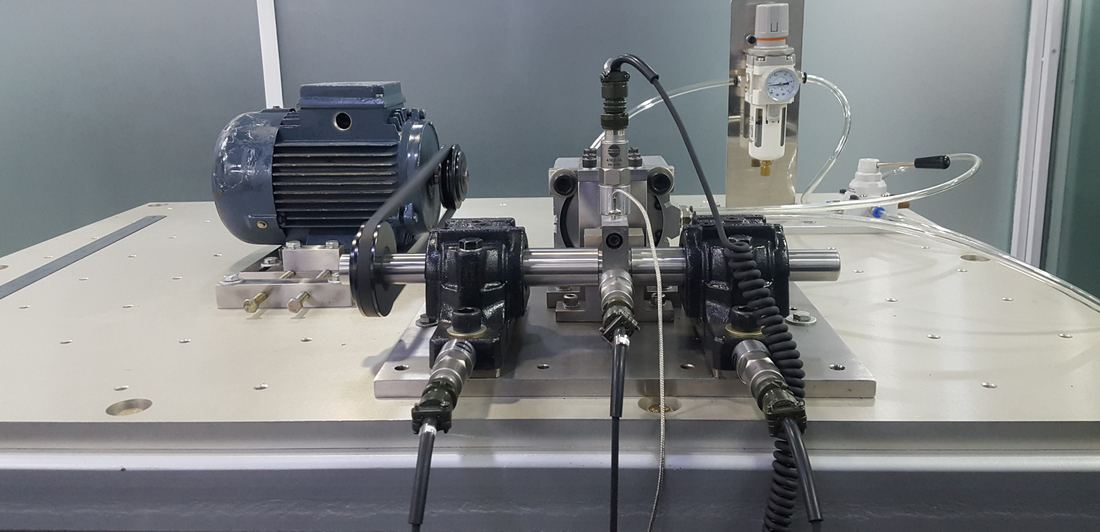
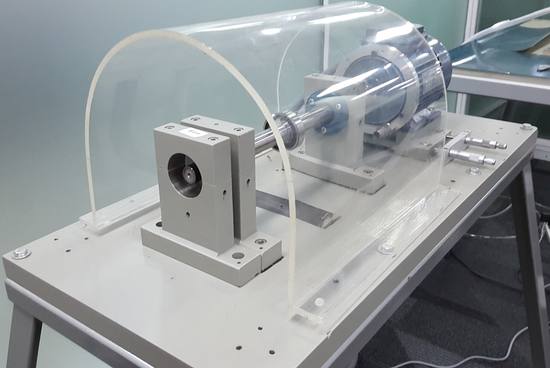
Diagnosis Jig, commissioned hardware, INTECH R&D programme

02 · Four challenges

The problems that defined how the jigs were built.

The four challenges run from the build-versus-buy decision to subcontractor technical validation, covering the engineering and commercial scope of an early-career project carried end to end.

01 / 04

In-house design and build versus outsource quote: ~76% cost saving

Taking the jigs in-house to keep the programme within budget.

Problem

The bought-out quote for the two jigs exceeded the R&D programme’s budget. Without an alternative, the programme would have had to reduce scope or find external funding.

Approach

Proposed carrying out the jig design, fabrication, and commissioning in-house and owned the full scope (structural design, materials selection, subcontractor management, manufacturing supervision, incoming inspection) against the R&D team’s specification. The decision depended on whether the technical scope could be executed reliably in-house.

Solution

Delivered both commissioned jigs at ~76% below the outsource quote from an overseas supplier, including design, materials, subcontractor manufacturing, and commissioning, which allowed the programme to proceed within budget. The same in-house-versus-outsource assessment was later applied on HIPPS (CADWorx redesign, ~96% lower cost), CI (design-phase engineering queries, ~USD 45K), and Zeon (stress analysis routing, ~86% lower cost).


02 / 04

End-to-end mechanical design of the Prognosis and Diagnosis Jigs

Bespoke design from structural analysis through integration-ready hardware packages.

Problem

No off-the-shelf test equipment matched the data-collection profile required by the AI / ML programme. Both jigs needed a bespoke mechanical design to hold bearings under controlled load, rotation, and environmental conditions while allowing data capture at the sensor points where failure signatures appear. The design had to be precise enough to support reproducible data collection.

Approach

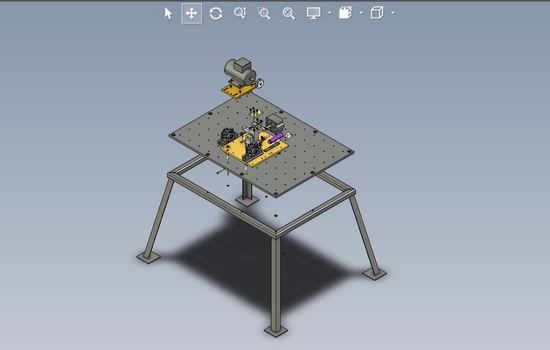
Owned the mechanical design of both jigs: base and frame structural design, material selection, loading analysis, and sensor-point integration. Developed each jig in Pro-E (3D CAD) with assembly and exploded views before release to manufacturing, so integration points and sensor access were resolved on the model. As a result, manufacturing queries were answered from the model rather than on site.

Solution

Delivered both jig designs through to commissioned hardware, with 3D models, assembly drawings, and integration-ready hardware packages. The jigs produced the controlled data the R&D programme required. This was my first project taking a mechanical design from concept to working hardware with full ownership for design, procurement, and integration decisions.

03 / 04

Subcontractor evaluation and manufacturing-process validation

Technical supervision during manufacturing, not only final inspection.

Problem

Both jigs required specialised processes (CNC grinding, milling, casting, and welding) carried out by external subcontractors. The accuracy of the AI / ML data depended on component quality, so dimensional and surface-finish deviations were a data-integrity risk as well as a reliability risk. Inspecting only the finished product would not reliably catch process-level deviations.

Approach

Took ownership of subcontractor evaluation, manufacturing supervision, and incoming inspection, and worked with subcontractors during manufacturing to catch deviations in process rather than after final assembly. Each manufacturing step was treated as a technical validation stage. The same working approach was later used with fabricators on HIPPS, CI, and Zeon.

Solution

Evaluated and supervised subcontractors for CNC grinding, milling, casting, and welding, and inspected manufactured components against the design specification before assembly. Both jigs met the precision required by the R&D programme. Staying involved through the manufacturing process, not only at product acceptance, became standard practice in later vendor and fabricator management.

04 / 04

Budget ownership and cost control as part of the engineering scope

Cost management as part of the engineering scope.

Problem

The R&D programme had a defined budget. The jig scope included materials, subcontractor payments, and consumables, all of which had to stay within budget while meeting the R&D team’s specification. The amounts were modest, but the programme depended on the in-house build staying within its cost estimate; an overrun would have undermined the build-versus-buy decision.

Approach

Owned budget development and cost control for jig manufacturing alongside the engineering work, tracking materials, subcontractor payments, and consumables against budget throughout execution rather than reconciling at the end.

Solution

Developed the manufacturing budget, managed materials procurement against it, and tracked subcontractor costs through completion. Both jigs were delivered within budget. Cost responsibility as part of engineering ownership continued on HIPPS (CADWorx, TPI), CI (design-phase engineering queries, punch resolutions), and Zeon (stress analysis routing).

03 · Design Gallery

From 3D model to commissioned hardware

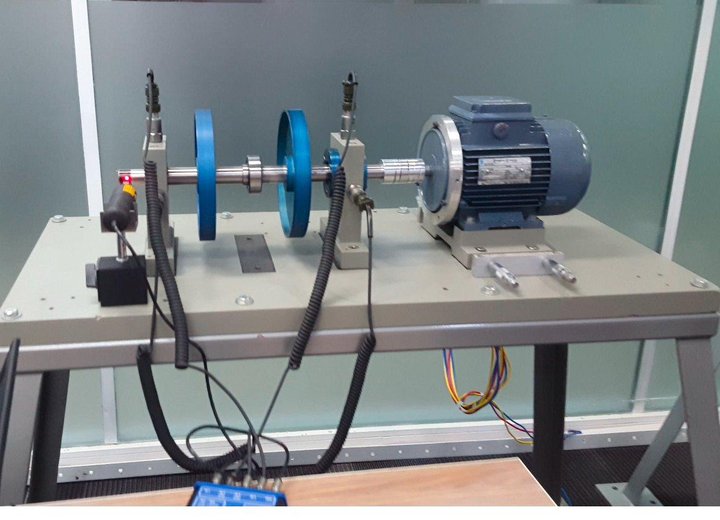
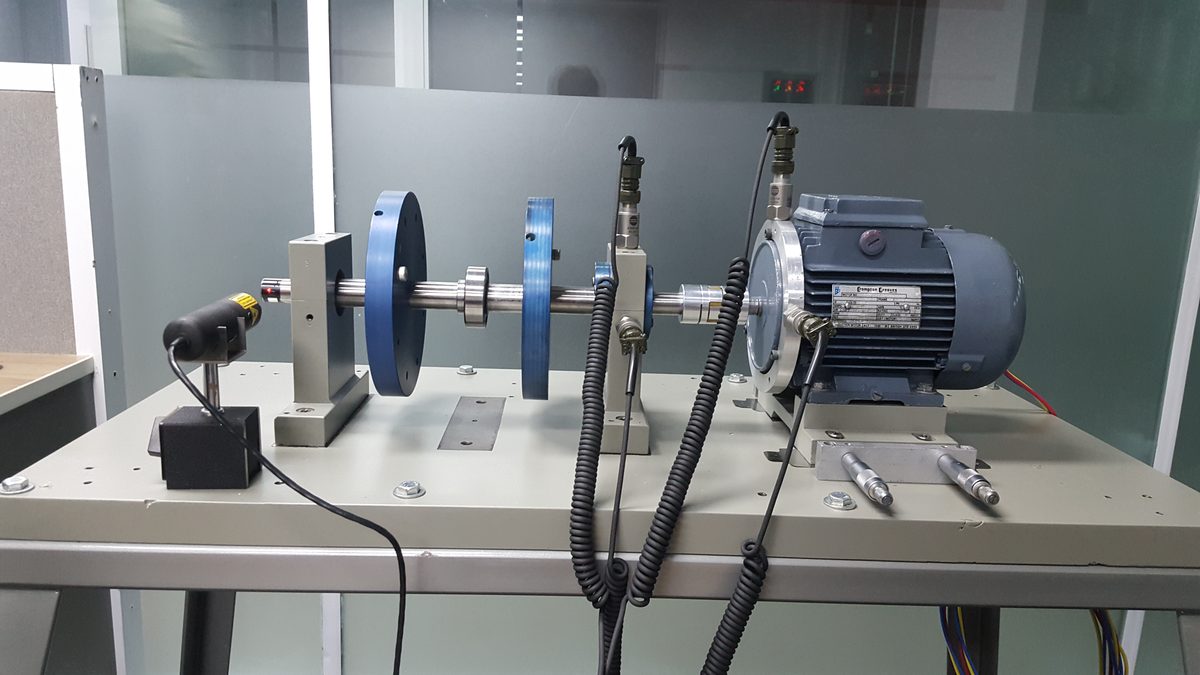
Jig 01 · Prognosis
Bearing failure onset: time-series data capture
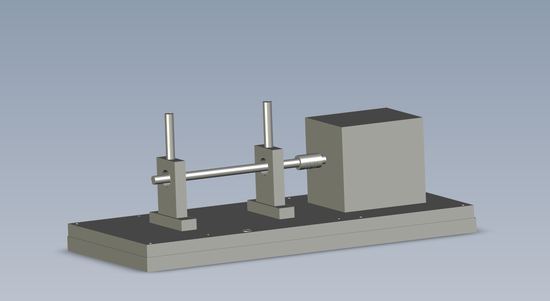
Designed to hold bearings under controlled load and rotation while capturing failure-onset signatures over time. The Pro-E model resolved sensor-access routes and integration points before manufacture, enabling the subcontractor scope to run against a complete set of drawings and specifications.
Prognosis Jig, commissioned hardware
Jig 02 · Diagnosis
Bearing failure state: fault classification data capture
Designed to capture failure-state patterns across defined fault configurations for AI classification training, meeting the bearing loading and sensing requirements without compromising sensor placement or load conditions.
Diagnosis Jig, commissioned hardware

04 · Acknowledgement

What the programme leadership said

Sohail Qadir
“The R&D team has done an excellent job in executing a challenging vision of creating end to end life cycle of the AI / ML data extraction hardware in house. Their efforts are much appreciated.”
Sohail Qadir
President & CEO
INTECH Automation & Intelligence
R&D Jigs · CEO endorsement
Aamir Ayub
“Abubakar’s technical acuity was evident throughout the R&D jig programme. His keen eye for detail — whether reviewing design drawings, evaluating subcontractors, or inspecting manufactured components — meant that issues were consistently identified before they could affect the programme timeline or specification.

What stood out equally was his resilience during manufacturing. When obstacles arose, he found practical, resourceful paths forward without losing sight of the programme objectives. That quality under pressure is not common at this stage of an engineering career.

His ability to own the complete design-to-execution cycle — coordinating across mechanical, electrical, and software disciplines — demonstrated a maturity of engineering management that delivered both jigs to specification and within budget.”
Aamir Ayub
R&D Division Manager
INTECH Automation & Intelligence
R&D Jigs · Direct management
Zeeshan Shabbir
“I have had the pleasure of knowing Muhammad Abubakar as both a university class fellow and colleague — he is an exceptional individual with a remarkable blend of engineering expertise, dedication, and innovation. His commitment to excellence was evident in every project, from research studies to manufacturing of robots, and his innovative design approach and ability to translate abstract ideas into tangible, measurable outcomes consistently delivered outstanding results. Muhammad Abubakar has my highest recommendation without reservation.”
Zeeshan Shabbir
R&D Engineer
INTECH Automation & Intelligence
R&D Jigs · Peer engineer

Explore my Work

Five flagship deliveries